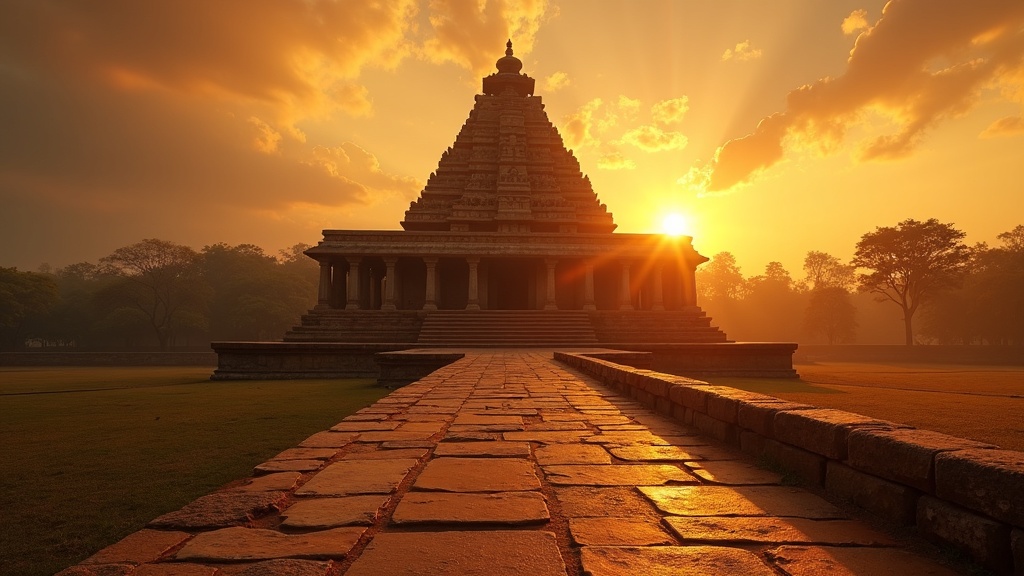
"He who beholds the Sun Temple of Konark, sees the work of gods — not the labour of mortal hands."— Ancient Sanskrit inscription, Odisha
A Chariot Built for the Sun God
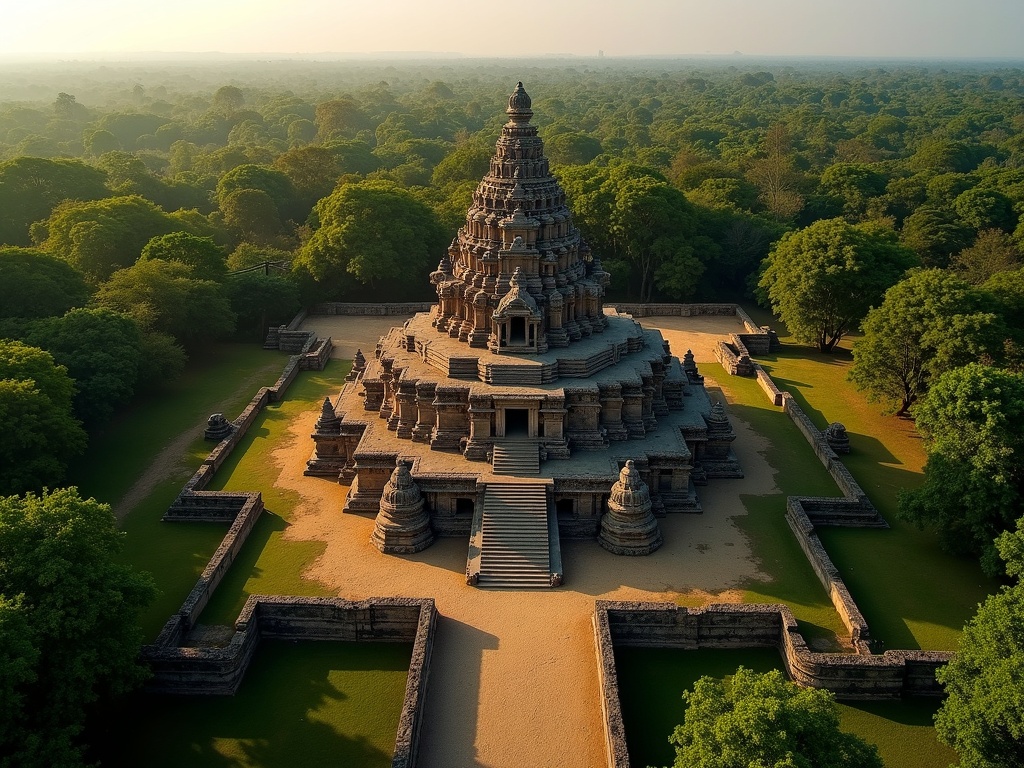
In 1250 CE, King Narasimhadeva I of the Eastern Ganga dynasty set out to build the greatest monument the world had ever seen — a temple in the form of the Sun God Surya's colossal chariot, with 24 intricately carved wheels and 7 galloping horses, eternally pulling the sun across the sky.
The site chosen was Konark, on the Bay of Bengal in Odisha — where the sea wind meets the sacred river Chandrabhaga. According to legend, Samba, the son of Lord Krishna, was cured of leprosy here after worshipping Surya for 12 years.
Engineering a Sacred Universe
The temple was built in the Kalinga style of Orissan architecture — a curvilinear shikhara tower (deul) rising 57 metres, fronted by a pyramidal audience hall (jagamohana) and a dance hall (natamandira). Every surface is encrusted with stone carvings of extraordinary detail and virtuosity.
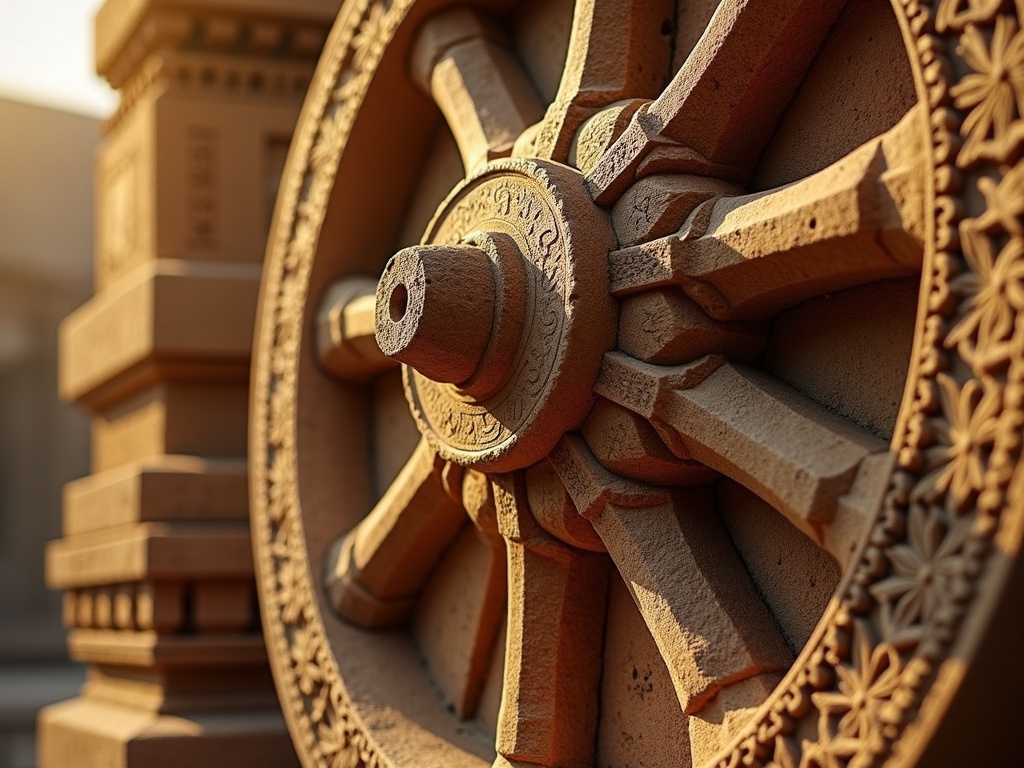
The 24 wheels are not mere decoration — each is a functioning sundial. By placing a stick at the centre of a wheel, a priest could read the time of day from the shadow cast across the wheel's spokes. Eight major spokes mark the eight pahars (3-hour periods) of the Hindu day.
Stone Carved with the Full Drama of Life
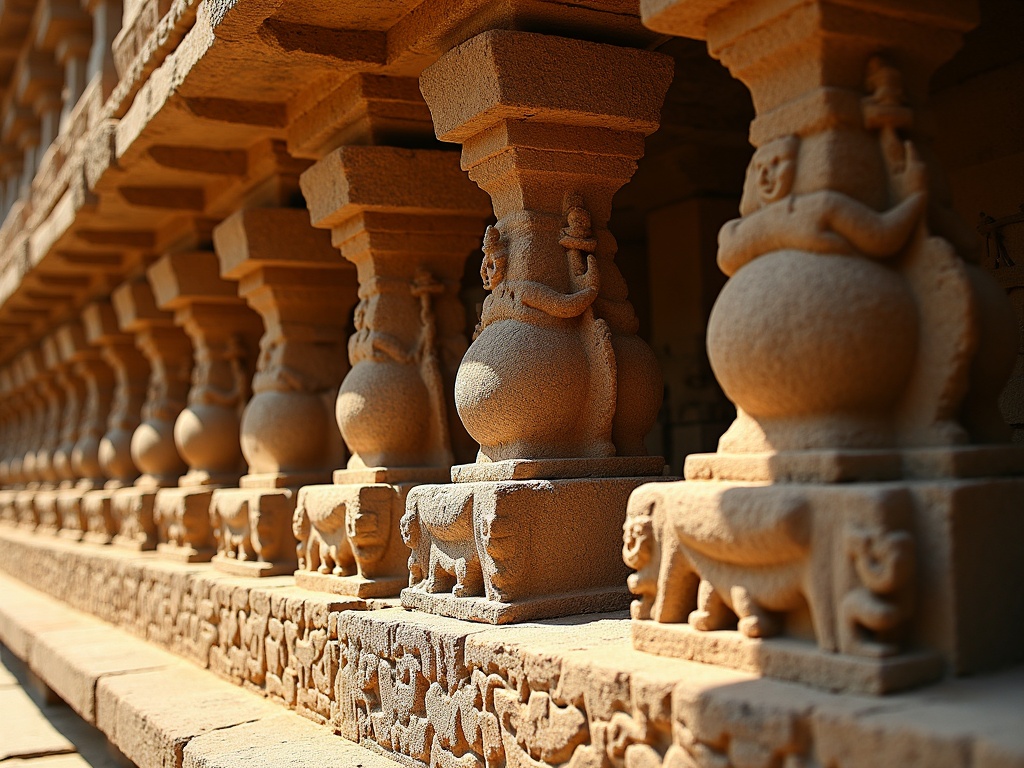
The temple's exterior tells the entire story of human existence. Three horizontal bands of sculpture encircle the base: the lowest depicts scenes from daily life — processions, hunts, caravans; the middle band shows amorous couples and celestial dancers; the upper band presents gods, goddesses, and mythological narratives.
The famous erotic sculptures — the mithunas — are not gratuitous. In Tantric philosophy, they represent the union of opposites, the sacred and the earthly, the path to moksha (liberation) through the full embrace of life.

Seven Horses, One Eternal Journey
The seven horses pulling the chariot represent the seven days of the week, the seven colours of the rainbow, and the seven metres of Sanskrit prosody. They strain forward with ferocious energy — nostrils flared, muscles rippling — as if truly straining against the weight of the sun.
The horses face east, greeting the sunrise each morning. The chariot wheels on the south wall catch the afternoon sun. At the original height, the first rays of dawn would strike the main idol inside the sanctum and illuminate the deity in golden light — a feat of precise solar engineering.
Rise, Fall & Rediscovery
Construction Begins
King Narasimhadeva I of the Eastern Ganga dynasty commissions the temple. According to legend, 1,200 artisans laboured for 12 years to complete it.
Temple Consecrated
The Sun Temple is completed and consecrated to Surya, the Hindu sun god. The main sanctum (deul) rises ~57 metres, visible from far out at sea — sailors called it the 'Black Pagoda'.
The Magnet Legend
Sailors reported that the massive lodestone at the temple's apex disrupted ship compasses. Portuguese sailors allegedly removed it to restore navigation, destabilising the tower's delicate balance.
Kalapahad's Invasion
The Afghan general Kalapahad raids Odisha and desecrates many temples, including Konark. The main spire is severely damaged. The temple begins its long decline.
Sanctum Sealed
Local priests, fearing further desecration, seal the sanctum entrance and remove the principal idol to safety. The temple falls into disuse.
Rediscovered by the British
British engineer T. E. Moorsom surveys the ruins. Massive sand dunes had buried the lower portions, ironically preserving the intricate carvings from the elements.
Archaeological Conservation
The British fill the Jagamohana (audience hall) with sand and seal it to prevent structural collapse — the same sand that preserved it now holds it together. Excavation reveals extraordinary erotic and mythological carvings.
UNESCO World Heritage
The Sun Temple is inscribed on the UNESCO World Heritage List, recognised as an 'outstanding example of Orissan temple architecture' and a masterpiece of human creative genius.
"Even in ruin, Konark remains what it has always been — not a building, but a cosmology. A universe rendered in stone."— Archaeological Survey of India